The Fallacy of the Calorie Why the Modern Western Diet Is Killing Us and How to Stop It Book Review
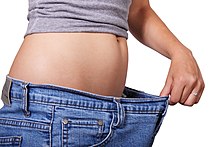
Fad diets are popular non-standard diets that often promise dramatic weight loss. However, they are usually not supported by scientific testify, and they sometimes offer dangerous dietary communication.
A fad diet is a diet that becomes popular for a short time, similar to fads in style, without being a standard dietary recommendation, and often making unreasonable claims for fast weight loss or health improvements.[1] [ii] [iii] [four] [five] In that location is no single definition of what is a fad diet. The term fad diet encompasses a multifariousness of diets with different approaches and prove bases, and thus dissimilar outcomes, advantages, and disadvantages.[1] [2]
Mostly, fad diets hope an array of short-term changes requiring little to no effort; attracting the interests of uneducated consumers about whole-diet, whole-lifestyle changes necessary for sustainable health benefices.[1] [2] [half-dozen] Fad diets are frequently promoted with exaggerated claims, such as rapid weight loss of more than 1 kg/calendar week or improving wellness by "detoxification", or even dangerous claims, such as highly restrictive and nutritionally unbalanced nutrient choices leading to malnutrition or eating non-food items like cotton wool wool.[ii] [3] [seven] [8] Highly restrictive fad diets should be avoided.[9] [x] At all-time, fad diets may offer novel and engaging ways to reduce caloric intake, only at worst they may exist medically unsuitable to the private, unsustainable, or fifty-fifty dangerous.[1] [two] Dietitian advice should be preferred earlier attempting any nutrition.[3]
Glory endorsements are oft used to promote fad diets, which may generate pregnant acquirement for the creators of the diets through the sale of associated products.[3] [eleven] Regardless of their evidence base of operations, or lack thereof, fad diets are extremely pop, with over 1500 books published each year, and many consumers willing to pay into an industry worth $35 billion per yr in the The states.[ane] Near 14-xv% Americans declare having used a fad diet for short-term weight loss.[1]
Although fad diets may have a negative connotation for health professionals,[1] some take scientific evidences and therapeutic applications, such as the ketogenic nutrition for epilepsy[12] or caloric restriction and the Mediterranean diet for obesity and diabetes,[i] [ii] [ix] [thirteen] and several producing similar benefits to commercial diets or standard care when done nether professional supervision.[14] [15] [xvi] [17] [xviii]
Description [edit]
Definition [edit]
There is no single definition of what is a fad diet, encompassing a variety of diets with unlike approaches and evidence base of operations, and thus different outcomes, advantages, and disadvantages.[2] Furthermore, labeling a nutrition as a fad is ever-changing, varying socially, culturally, timely, and subjectively.[one] [2] However, a mutual definition lies in the popularity of a nutrition promoting short-term changes instead of lifelong changes, and that popularity (or lack thereof) has no association with a nutrition'south effectiveness, nutritional soundness, or safety.[one] [2] [3] The Federal Trade Committee defines fad diets as those that are highly restrictive and promoting free energy dense foods that are often poor in nutrients.[ix] [x]
Types of fad diets [edit]
Although fad diets are ever-irresolute, virtually tin can be categorized in these general groups:[1] [4] [6]
- Concrete or physiological testing, such as applied kinesiology and claret group assay
- Low calorie diets:
- Food-specific diets, which encourage eating big amounts of a unmarried food, such as the Cabbage soup diet
- High-protein, low-carbohydrate diets, such as the Atkins diet, which kickoff became popular in the 1970s
- High-fiber, low-calorie diets, which often prescribe double the normal amount of dietary fiber
- Liquid diets, such every bit SlimFast meal replacement drinks
- Fasting
Fad diets are generally restrictive, and are characterized past promises of fast weight loss[3] [7] or great concrete health (notably by "detoxification"),[2] [three] [19] and which are not grounded in sound science.[3] [xi] [19] : 12
Some fad diets, such as diets purporting to exist alternative cancer treatments, promise wellness benefits other than weight loss.[6]
Commercial weight management organizations (CMWOs), such as Weight Watchers, were inappropriately associated with fad diets in the by.[5] [twenty]
Several factors can crusade someone to commencement a fad nutrition, such as socio-cultural peer pressure on body image and self-esteem, including the outcome of media, and economic toll of comprehensive programs.[ medical citation needed ]
Bad diets [edit]
Although not all fad diets are inherently detrimental to health, there are "red flags" of bad dietary advice, such every bit:[i] [iii] [8] [ten] [17] [21]
- Promising rapid weight loss such as more than ane kg/week (ii lb/week) or other extraordinary claims that are "too practiced to be true"
- Being nutritionally imbalanced, or highly restrictive, forbidding unabridged food groups, or fifty-fifty only allowing one nutrient or food blazon. In the most extreme grade, they may claim that humans can survive without eating or by having liquid meals merely or past consuming non-food items such every bit cotton wool
- Recommending eating food in a specific order or combination, sometimes based on physiological properties such as genetics or blood type
- Recommending specific foods purported to exist detoxing or to "burn" fat
- Promises a one-size-fits-all "magic bullet" with niggling to no effort, without including or encouraging long-term whole dietary changes nor physical practice tailored to the specific needs of the individual
- Based on anecdotal testimonials such every bit personal success stories, instead of medical evidence from randomized controlled trials
- Requires the purchase of specific products, supplements, or resources
- Provides no health warning for those with pre-existing medical illnesses
- Focuses on appearance enhancement rather than wellness benefits
- Existence based on a "surreptitious" that has yet to exist discovered
The National Plant for Health and Care Excellence in the United kingdom of great britain and northern ireland devised a set of essential criteria to exist met by commercial weight management organizations to exist canonical.[xx]
Health claims evaluations [edit]
Fad diets have variable results every bit these include a diversity of unlike diets.[1] [2] They tend to event in short-term weight loss, but afterwards, the weight is often regained.[2] [6]
The restrictive approach, regardless of whether the diet prescribes eating big amounts of high-fiber vegetables, no grains, or no solid foods, tend to be nutritionally unsound, and tin cause serious wellness issues if followed for more than a few days.[2] [6]
A considerable disadvantage of fad diets is that they encourage the notion of a diet as a curt-term behavior, instead of a sustainable lifelong alter.[1] [2] [6] Indeed, fad diets often fail to re-educate dieters about a healthy nutrition, portion command and under-emphasize efforts and especially concrete activity, and then that followers cannot acquire the skills and knowledge they demand for long-term maintenance of their desired weight, even if that weight is accomplished in the short-term.[1] [2] Several diets are also unsustainable in the long-term, and thus dieters revert to former habits later on deprivation of some foods which may lead to binge eating.[1] [two] Fad diets more often than not fail to accost the causes of poor diet habits, and thus are unlikely to change the underlying beliefs and the long-term outcomes.[1]
Some fad diets are associated with increased risks of cardiovascular diseases and mental disorders such as eating disorders and depression,[ medical commendation needed ] and dental risks.[22] For case, long-term low-carbohydrate high-fat diets are associated with increased cardiac and not-cardiac mortality.[23] Teenagers following fad diets are at risk of permanently stunted growth.[6]
Some fad diets do all the same provide curt-term[15] [18] and long-term results for individuals with specific illnesses such as obesity or epilepsy.[12] [14] [sixteen] [17] Very-low-calorie diets, as well known as crash diets,[24] [25] [26] [27] are efficient for liver fat reduction and weight loss before bariatric surgery.[28] [29] Low-calorie and very-low-calorie diets may produce initially faster weight loss within the first 1–ii weeks of starting compared to other diets, but this superficially faster loss is due to glycogen depletion and water loss in the lean body mass and regained speedily after.[16]
Diet success in weight loss and wellness benefits is virtually predicted by adherence and negative energy residue, regardless of the diet type.[16] [30] [31] Fad diets, with their popularity and multifariousness, may be useful to introduce obese individuals via a dietary plan tailored to their nutrient preferences and lifestyle into long-term dietary and lifestyle changes nether supervision by diet professionals.[1] [2] [fourteen] [16] Indeed, a broad multifariousness of diets aiming at gentle caloric restriction under supervision, including commercial, fad, and standard care diets, take shown considerable and comparable success and safety, both in the brusque-term and long-term.[1] [2] [14] [sixteen] [thirty] [32] [33] Comprehensive diet programs are more effective than dieting without guidance.[16] [32] [34] According to David 50. Katz, "efforts to improve public health through diet are forestalled not for desire of knowledge near the optimal feeding of Homo sapiens only for distractions associated with exaggerated claims, and our failure to convert what we reliably know into what we routinely do.[8]
At that place is a commonly claimed effigy that "95% of dieters regain their weight later on a few years", but this is a "clinical lore" based on a 1953 primary study,[35] with newer show demonstrating long-term weight loss after dieting under supervision,[14] [sixteen] [36] although a 2007 review found that ane-third to two-thirds of dieters had slight to no long-term weight loss based on bottom quality trials, supporting the Health at Every Size according to its authors.[37] [38] A review reported that extended calorie restriction suppresses overall and specific food cravings.[39]
Salubrious diets [edit]
Improving dietary habits is a societal issue that should be considered when preparing national policies, according to the World Wellness Organization. They propose a prepare of recommendations for a healthy diet:[40] [41]
- Achieve an energy balance and maintain a healthy weight.
- Promote the consumption of fruits, vegetables, whole-grains, and nuts.
- Limit sweets and sugar.
- Limit salt from all sources and ensure salt is iodized.
- Limit total fat consumption and in detail supplant saturated fats by unsaturated fats equally much as possible, and eliminate trans-fat acids.
The 2015-2020 Dietary Guidelines for Americans implement these recommendations in the U.s.a., equally follows:[42] [43]
- Follow a lifelong good for you eating design.
- Focus on diverseness, nutrient density, and quantity.
- Limit calories from added sugars and saturated fats. Reduce sodium intake.
- Adopt healthier nutrient and beverage choices, such every bit nutrient-dense foods. These preferences should account for cultural and personal preferences to make application easier.
- Customs support of healthy eating patterns for everyone.
Opposite to the previous editions which mainly focused on dietary components such every bit nutrient groups and nutrients, the latest offering a more global approach focusing on eating patterns and nutrients characteristics equally "people exercise not consume nutrient groups and nutrients in isolation only rather in combination, and the totality of the nutrition forms an overall eating pattern". Indeed, "the components of the eating pattern can accept interactive and potentially cumulative effects on health", noting that "these patterns can be tailored to an individual's personal preferences, enabling Americans to choose the nutrition that is correct for them".[42]
Several diets take shown sufficient show of safe and constant beneficial effects to be recommended. These include the Nuance diet for anyone simply peculiarly for cardiac risk prevention in obesity and diabetes, the Mediterranean diet with like indications, the U.S. Department of Agriculture "MyPlate" for good for you nutrition guidelines, and the ketogenic diet for reducing risk of seizures in people who have epilepsy.[5] [9] [12] [42] [xiii]
History [edit]
Ancient history [edit]
The word "nutrition" comes from the Greek diaita, which described a whole lifestyle, including mental and physical, rather than a narrow weight-loss regimen. The Greek and Roman physicians considered that how a body functioned was largely dependent on the foods eaten, and that different foods could affect people in different mode.[21]
Western medical science at the time was founded on diatetica, the "fundamental healing therapy of a regimen of certain foods". Overweight or being too slim were seen as signs of an unhealthy body, with an imbalance of its four essential "humours" (black bile, yellowish bile, blood, and phlegm).[21]
The earliest diet known is from the oldest surviving medical certificate, the Ebers papyrus (circa 1550 BC), which described a recipe for an antidiabetic diet of wheat germ and okra.[44] [45] An early dietary fad is known from about 500-400 BC, when athletes and warriors consumed deer livers and lion hearts, thinking these products would impart benefits such equally bravery, speed, or force.[46]
In the Corpus Hippocraticum, Hippocrates, a Greek philosopher and physician c. 460-370 BC, describe his views on homo health, as beingness primarily influenced past alimentation and the environment we inhabit. He idea that the underlying principles of wellness were food and practise, what he called "work", and that a high food intake needed a lot of hard piece of work to exist properly assimilated. A failure to balance work and nutrient intake would upset the body's metabolism and incur diseases. Every bit he wrote: "Homo cannot live healthily on food without a sure amount of exercise". He thought that changes in food intake should be made progressively to avoid upsetting the trunk. He made several recommendations, some of which existence: walking or running after eating, wrestling, avoiding drinks outside of meals, dry out foods for obese people, never missing a breakfast and eat but but 1 primary repast a day, bathing in only lukewarm h2o, avoiding sexual practice, and the more than unsafe "induction of vomiting", which he considered particularly beneficial. Present, these advices seem mixed, some sensible, others inadvisable or even dangerous, only they made sense at the fourth dimension given the contemporary cognition and practices. For example, induced vomiting was quite pop, virtually an art form. The importance of foods was further established past 1 of his followers, who became extremely influential, the Greek physician Galen (129 – ca. 216 Advertisement), with his work On the Power of Foods, where he claimed that good doctors should also exist skillful cooks, and provided several recipes.[21]
In the classical earth, what foods were eaten, and how much, played an of import function in ethical, philosophical, and political teachings and thinking, centered on the ideas of luxury and corruption. Food was for sustenance alone, overindulging was morally and physically bad, at least a manifestation of a lack of cocky-control, but at worst leading to further passions and greed of other luxuries.[21]
19th century [edit]
Fad diets as nosotros know them really started during the Victorian era in the 19th century.[5] A competitive market for "healthy diets" arose in the 19th-century developed world, as migration and industrialization and commodification of food supplies began eroding adherence to traditional ethno-cultural diets, and the health consequences of pleasure-based diets were becoming apparent.[nineteen] : ix Every bit Matt Fitzgerald describes it:
This modern cult of good for you eating is made upwardly of innumerable sub-cults that are constantly vying for superiority. ... Like consumer products in commercial markets, each of these diets has a make name and is advertised as being ameliorate than competing brands. The recruiting programs of the healthy-diet cults consist almost entirely of efforts to convince prospective followers that their diet is the Ane True Mode to eat for maximum physical health ... The specific cult whose "scientific discipline"-backed schtick a person finds most convincing usually depends on his or her identity biases.[19] : 9–xiii
Many fad diets, at the time chosen "foodie",[47] were promoted during the 19th century.[four]

Lord Byron tried all kinds of fad diets, and devised one, the "vinegar and water diet" in the 1820s.
Lord Byron was obsessed with his advent, as he had a "morbid propensity to fatten." He tried several diets, such equally his favorite meal of biscuits and soda h2o, and others which he devised, such as the "vinegar and water diet" in the 1820s, which was very pop at the fourth dimension, and involved drinking water with apple cider vinegar.[21] [47] He would bicycle perpetually betwixt self starvation, measurements, and binge eating. His influence was such that he was accused of encouraging melancholia and emotional volatility on Romantic youth, making girls "sicken and waste away". Indeed, co-ordinate to Byron, "a woman should never be seen eating or drinking, unless it exist lobster salad and champagne, the simply truly feminine and becoming viands".[21] His views on women's diets and appearances worried his contemporaries, such as the American physician George Miller Beard, who fretted that immature ladies may live their growing girlhood in semi-starvation because of their fears of "incurring the horror of disciples of Lord Byron".[5] [21]
In 1825, Jean Brillat-Savarin wrote about a low carbohydrate diet and focusing on chewing and swallowing to meliorate taste nutrient and supposedly eat less.[47] This thought would later reappear in 1903 under the name of "Fletcherizing", derived from its writer'southward proper noun Horace Fletcher, "a self-taught nutritionist". Fletcher promoted chewing all food until it was thoroughly mixed with saliva, to the point that it was swallowed in a liquid country.[47]
"Banting" or "to bant" became a highly popular synonym of dieting in 1863, when William Banting published "A Letter on Corpulence", which detailed the first low-saccharide diet, which he followed from Dr. William Harvey, a surgeon known for a starch- and sugar-free diet treatment for diabetes. He immediately lost weight, from 202 to 156 pounds eventually. Banting is credited for writing the first diet volume, which at his decease in 1878 sold more than 58,000 copies over a full of 12 editions published betwixt 1863 and 1902. Although the 2500 copies of the beginning and second editions were printed at his expenses and distributed for free, in the hopes of "benefitting to the working-class people", he sold afterwards copies.[5] [48]
Around the same time, Sylvester Graham, of Graham cracker fame, is often given credit for creating the start fad nutrition in the 1830s and is considered the father of all modern diets.[v] The diet recognized the importance of whole grains food. Designed from a religious motivation, Graham promoted a raw-food vegetarian diet that was lower in salt and fatty, emphasizing an anti-industrial, anti-medical "simpler" or "natural" lifestyle, opposing the meat and other rich, calorie-dumbo foods produced in great quantities in the industrial era, declaring them "sinful".[4] [47] In 1830, he was appointed a full general agent of the Pennsylvanian Temperance Society. During his time at that place, and due to his history, and inspired by the French vitalist school of medicine, he thought nutrition had moral as well every bit concrete qualities, and viewed any want for food or drinkable not due to necessity (stark hunger or thirst) to be depravation. Consequently, he viewed gluttony as the debilitating consequence of an unhealthy urge. He was determined to fight against what he perceived as nutritional "debauchery" and gluttony. He became a controversial figure, an evangelical New England preacher and speaker, with his spartan views on nutrition at a fourth dimension where Americans' diets were primarily fabricated of meat and white bread, by advocating adamantly in favor of raw vegetarian food and whole-grain food, authorizing but limiting meat, and forbidding highly refined or commercially baked white bread. He also described the utilize of corsets equally "disfiguring" and advocated loose, comfortable article of clothing, which further attracted women to his precepts. Afterward his death in 1851, his followers, dubbed "Grahamites", nearly of them beingness women but also including famous men such as John Harvey Kellogg of cornflakes fame, continued to advocate vegetarianism, temperance, and bran bread. Graham's ideas proved to accept a lasting influence on American diet, as the per capita meat consumption dropped gradually in the subsequent years, whereas vegetable consumption increased and Americans started to eat more balanced diets. Graham'south nutrition legacy continued in the 20th with another diet philosophy by Bernarr Macfadden, who relentlessly promoted a dieting philosophy named "physical culture", the idea that nearly all diseases were caused by toxins in the blood from poor diet and lack of exercise, and that nearly all diseases could be cured through fasting, eating the correct foods, and concrete exercise. Macfadden was i of the most constructive promoter of diets in history, as he is believed by historians to be largely at the root of 20th and 21st century health and fitness practices in America.[iv] [5]

The tapeworms diet, a likely hoax, purportedly involving dieters who would willfully ingest tapeworms to blot nutrient in the intestine.
The 19th century also saw the first and ane of the most dangerous fad diet pills, with the marketing of arsenic pills for weight loss, which not only did non work, but which dieters often consumed more quantity than the prescribed dosage. Some diet hoaxes besides appeared, such as the tapeworms diet, where the dieters would purportedly willfully ingest tapeworms in the hopes they would accomplish maturity in the intestines and absorb food, until the dieter attains the weight loss goal and consumes an anti-parasitic pill to impale and hopefully excrete the worms, if the dieter was lucky enough to not experience gastric obstacle.[21] [49]
20th century [edit]
The concept calorie restriction appeared under the name of "calorie counting" in the 1917 book "Nutrition and Health, With Key to the Calories" past Lulu Hunt Peters.[5] [47]
The modern fad diets originated afterwards, in the 1930s, with the showtime depression calorie nutrition plans, forth the marketing of the grapefruit nutrition, which became popular and known equally the "Hollywood diet", and involved eating grapefruit or its juice with every meals.[ commendation needed ] Such liquid diets, cleanses and detox diets would show popular over the following decades with the Master Cleanse or Lemonade Nutrition in 1941 and Last Take a chance Nutrition in 1976.[50] Around the same time, in 1925, Lucky Strike launched the "cigarette diet", relying on the appetite suppressing effect of nicotine, with the famous marketing slogan "Reach for a Lucky instead of a sweet".[ citation needed ] The use of amphetamines, initially designed to treat narcolepsy, skyrocketed when doctors began prescribing them for ambition suppression and the handling of depression, condign a high success in the diet industry. Despite the American Medical Association opposing this use of amphetamines every bit early as 1943 due to issues of habit, doctors continued to prescribe them, in addition to barbiturates to reduce the addiction cravings.[5] The showtime liquid poly peptide diet appeared also in the 1930s with the marketing of the "Dr. Stoll'due south Help".[47]

An advertisement for a bread using the contemporaneously popular Hollywood Diet as a selling statement.
In 1950, another liquid nutrition appears, the "cabbage soup diet", highly restrictive but promising groovy weight loss in the first week, at the expense of causing flatulence.[47] Later, and although it did not become a fad for another generation, the Zen macrobiotic diet was developed by the Japanese philosopher George Ohsawa, purporting a "yin and yang of nutrient" to assist maintain the body's residuum, and proposing a grain-heavy diet equanimous of 50%-sixty% of whole grains (e.g., dark-brown rice), discouraging refined or processed nutrient and certain cooking techniques and ustensils.[6] [47] [51]
Bernarr Macfadden was another major figure of dieting in the 1950s, taking the legacy of Graham. He grew in a difficult environment. At age 11, both of his parents were deceased, his male parent from alcoholism, his female parent from tuberculosis, and suffered from several illnesses himself. He afterwards went on to live in a farm, which fortified his wellness, and studied man physiology, diet, and nutrition. Due to his history, and largely influenced by Graham, he became convinced that all health issues were due to nutrition. He advocated a similar diet, and regular fasting in improver. His demise happened equally a consequence of his extreme devotion to his own ideas: since he was convinced fasting could cure any ailment, he tried to treat a urinary tract blockage he adult in 1955 by fasting, which only acquired emaciation which no physician could undo.[5]
Other notable food faddists of this era include Paul Bragg, Adelle Davis, and J. I. Rodale.[52]
In 1961, Jean Nidetch founded the Weight Watchers. In 1970, the "sleeping beauty nutrition", using allaying pills to avoid eating, became popular. Slim Fast appears in 1977, claimed every bit a "super nutrition" by having shakes for breakfast and tiffin.[47] In 1985, Fit for Life promotes a diet forbidding complex carbohydrates and proteins in the same meal. In 1992, 1995, and 2003, the Atkins diet, Zone diet and South Beach diets appear successively.[4] [5] [six] The Atkins nutrition has been described as "one of the most pop fad diets in the Us".[53]
In 1997, the American Eye Association (AHA) "declares war on fad diets [...] to inform the public of misleading weight loss claims".[54] [55]
21st century [edit]
During the early on 2000s, the Paleolithic diet was popularized by Loren Cordain and has attracted a largely internet-based following on forums and social media.[56] This modern fad diet consists of foods thought to mirror those eaten during the Paleolithic era.[57] [58]
The very dangerous cotton brawl diet surfaced in 2013, prompting dieters to consume up to five cotton wool balls at a fourth dimension to lower hunger, leading to abdominal occlusion and potentially decease.[50] [3] Aseem Malhotra has promoted a depression-carbohydrate fad diet known as the Pioppi nutrition.[59] [threescore] It was named by the British Dietetic Association as one of the "summit five worst celeb diets to avoid in 2018".[59]
A recent fad diet promoted on social media platforms is the carnivore diet that involves eating only creature products. At that place is no clinical evidence that the carnivore diet provides whatsoever health benefits.[61] [62] [63] Other recent fad diets include the lectin-free nutrition that has been promoted by Steven Gundry[64] and the pegan diet of Mark Hyman.[65]
Marketing [edit]
Nearly fad diets promote their plans equally existence derived from religion or science.[4] Fad diets may be completely based on pseudoscience (east.yard., "fat-burning" foods or notions of vitalism); nearly fad diets are marketed or described with exaggerated claims, not sustainable in sound science, well-nigh the benefits of eating a certain way or the harms of eating other ways.[iii] [19] : 33, 74, fourscore, 155
Such diets are often endorsed by celebrities or celebrity doctors who manner themselves as "gurus" and profit from sales of branded products, books, and public speaking.[11] [xix] : xi–12 [66] One sign of commercial fad diets is a requirement to purchase associated products and pay to attend seminars in social club to gain the benefits of the nutrition.[one] [67]
The audience for these diets is people who want to lose weight quickly[68] or who want to exist healthy and discover that belonging to a grouping of people defined by a strict way of eating helps them to avoid the many bad food choices bachelor in the adult globe.[19] : eleven
Regardless of their evidence base, or lack thereof, fad diets are extremely popular, with over 1500 books published each year, and many consumers willing to pay for diet products, making for an industry worth $35 billon/year in the United states.[i] About xiv-fifteen% Americans declare having used a fad diet for brusque-term weight loss.[one] Fad nutrition is a role of the diet industry with no specific estimation bachelor, with the biggest part being "nutrition foods" such as light soda, for a total nutrition industry worth $35 billon/year in the U.s.a..[6] [69]
An analysis of the top trending nutrition-related queries on Google'due south search engine between 2006 and 2016 reveals that diet practices are highly variable and ever changing.[70]
Order and culture [edit]
According to the American Centre Clan, a liquid very-depression-calorie diet caused at least 60 deaths in 1977.[6] [50]
In Sweden, in 2005, the Atkins diet was at the crux of a controversy, when Dietician Annika Dahlqvist started recommending information technology to her diabetic patients, which prompted an investigation by the Swedish National Establish of Public Health (Folkhälsoinstitutet).[71]
List of fad diets [edit]
Fad diets are a subset of all named or defined diets, typically identified past being associated by a founding person or arrangement, making health claims, nigh frequently of rapid weight loss.
See too [edit]
- Health food
- List of food faddists
- Food trends
References [edit]
- ^ a b c d e f g h i j m l m n o p q r due south t u five Hart, Katherine (2018). "4.half dozen Fad diets and fasting for weight loss in obesity.". In Hankey, Catherine (ed.). Avant-garde nutrition and dietetics in obesity. Wiley. pp. 177–182. ISBN9780470670767.
- ^ a b c d due east f g h i j g fifty m due north o p q r Hankey, Catherine (23 November 2017). Advanced Nutrition and Dietetics in Obesity. John Wiley & Sons. pp. 179–181. ISBN9781118857977.
- ^ a b c d due east f yard h i j k "Fact Sheet—Fad diets" (PDF). British Dietetic Clan. 2014. Retrieved 12 Dec 2015.
Fad-diets tin can be tempting every bit they offer a quick-fix to a long-term trouble.
- ^ a b c d eastward f g Kraig, Bruce (2013). The Oxford Encyclopedia of Nutrient and Drink in America. Oxford: Oxford University Press. pp. 623–626. ISBN9780199734962.
- ^ a b c d e f grand h i j k l Zoumbaris, Sharon 1000.; Bijlefeld, Marjolijn (25 November 2014). Encyclopedia of diet fads : understanding science and society (2nd ed.). Greenwood. ISBN9781610697606.
- ^ a b c d e f g h i j k Williams, William F. (2 December 2013). Encyclopedia of Pseudoscience: From Alien Abductions to Zone Therapy. Routledge. pp. 107–108. ISBN9781135955229.
- ^ a b Flynn MAT (2004). Gibney MJ (ed.). Chapter fourteen: Fear of Fatness and Fad Slimming Diets. Public Health Diet. John Wiley & Sons. pp. 236–246. ISBN978-ane-118-69332-2.
- ^ a b c Katz DL, Meller S (2014). "Can we say what nutrition is best for health?". Annu Rev Public Wellness. 35: 83–103. doi:10.1146/annurev-publhealth-032013-182351. PMID 24641555.
- ^ a b c d Van Horn, Fifty; Carson, JA; Appel, LJ; Burke, LE; Economos, C; Karmally, Due west; et al. (29 November 2016). "Recommended Dietary Pattern to Achieve Adherence to the American Heart Association/American College of Cardiology (AHA/ACC) Guidelines: A Scientific Statement From the American Centre Association". Apportionment. 134 (22): e505–e529. doi:x.1161/CIR.0000000000000462. PMID 27789558. S2CID 37889352.
{{cite journal}}: CS1 maint: multiple names: authors list (link) - ^ a b c Federal Trade Commission (15 Baronial 2019). "The Truth Backside Weight Loss Ads". Federal Trade Commission Consumer Data.
- ^ a b c Paradowski, Robert J. (2015). "Nutrition and Scientific discipline". In Holbrook, J. Britt (ed.). Ethics, Science, Engineering science, and Applied science: A Global Resources, Vol. 3 (2nd, online ed.). Macmillan. pp. 297–301. ISBN978-0028661964.
Fifty-fifty in adult countries, citizens accept the right to be provided with good food, but in the United states of america, for example, many consumers have either wasted their money or harmed their health by diverse food and diet fads. Many diet scientists consider it unethical for "medical quacks" to be making large amounts of money in this way from gullible Americans.
- ^ a b c "What is the Ketogenic Diet". www.eatright.org. University of Diet and Dietetics. Apr 2019.
- ^ a b American Diabetes, Association. (January 2019). "five. Lifestyle Direction: Standards of Medical Care in Diabetes-2019". Diabetes Care. 42 (Suppl 1): S46–S60. doi:x.2337/dc19-S005. PMID 30559231.
- ^ a b c d due east Jensen MD, Ryan DH, Apovian CM, Ard JD, Comuzzie AG, Donato KA, et al. (June 2014). "2013 AHA/ACC/TOS guideline for the management of overweight and obesity in adults: a study of the American College of Cardiology/American Heart Association Task Force on Practice Guidelines and The Obesity Guild". Circulation. 129 (25 Suppl 2): S102–38. doi:10.1161/01.cir.0000437739.71477.ee. PMC5819889. PMID 24222017.
- ^ a b Kuchkuntla, AR; Limketkai, B; Nanda, S; Hurt, RT; Mundi, MS (December 2018). "Fad Diets: Hype or Hope?". Current Nutrition Reports (Review). vii (4): 310–323. doi:10.1007/s13668-018-0242-i. PMID 30168044. S2CID 52132504.
- ^ a b c d e f g h Thom, 1000; Lean, 1000 (May 2017). "Is There an Optimal Diet for Weight Management and Metabolic Health?" (PDF). Gastroenterology (Review). 152 (7): 1739–1751. doi:10.1053/j.gastro.2017.01.056. PMID 28214525.
- ^ a b c Schwartz, J (March 2016). "Nutritional Therapy". Primary Care (Tutorial). 43 (1): 69–81, viii. doi:ten.1016/j.pop.2015.08.012. PMID 26896201.
- ^ a b Atallah, R; Filion, KB; Wakil, SM; Genest, J; Joseph, L; Poirier, P; Rinfret, S; Schiffrin, EL; Eisenberg, MJ (November 2014). "Long-term furnishings of 4 popular diets on weight loss and cardiovascular risk factors: a systematic review of randomized controlled trials". Apportionment: Cardiovascular Quality and Outcomes. seven (half-dozen): 815–27. doi:10.1161/CIRCOUTCOMES.113.000723. PMID 25387778.
- ^ a b c d e f 1000 Fitzgerald M (2014). Nutrition Cults: The Surprising Fallacy at the Core of Diet Fads and a Guide to Healthy Eating for the Rest of The states . Pegasus Books. ISBN978-i-60598-560-2.
- ^ a b Avery, Amanda (2018). "4.7 Commercial weight direction organisations for weight loss in obesity.". In Hankey, Catherine (ed.). Avant-garde nutrition and dietetics in obesity. Wiley. pp. 177–182. ISBN9780470670767.
- ^ a b c d e f g h i Foxcroft, Louise (2014). Calories & corsets : a history of dieting over 2,000 years (Highly cited volume). Profile Books. ISBN978-1847654588. Lay summary.
- ^ Mobley, C (January 2008). "Fad diets: facts for dental professionals". Journal of the American Dental Association (Review). 139 (1): 48–50. doi:10.14219/jada.archive.2008.0019. PMID 18167384.
- ^ Arnett DK, Blumenthal RS, Albert MA, Buroker AB, Goldberger ZD, Hahn EJ, et al. (September 2019). "2019 ACC/AHA Guideline on the Principal Prevention of Cardiovascular Disease: A Report of the American College of Cardiology/American Heart Association Task Force on Clinical Practice Guidelines". Apportionment. 140 (11): e596–e646. doi:10.1161/CIR.0000000000000678. PMC7734661. PMID 30879355.
- ^ "How to diet". nhs.united kingdom. NHS. 27 Apr 2018.
- ^ Joshi, Due south; Mohan, V (Nov 2018). "Pros & cons of some pop extreme weight-loss diets". The Indian Journal of Medical Research. 148 (5): 642–647. doi:x.4103/ijmr.IJMR_1793_18. PMC6366252. PMID 30666989.
- ^ "Crash dieting: Desperate measures". The Independent. 15 September 2009.
- ^ Dowling, Tim (30 May 2018). "The Big Crash Nutrition Experiment review – does dramatic calorie reduction work?". The Guardian.
- ^ Thorell, A; MacCormick, Advertizing; Awad, South; Reynolds, N; Roulin, D; Demartines, Northward; Vignaud, Thou; Alvarez, A; Singh, PM; Lobo, DN (September 2016). "Guidelines for Perioperative Care in Bariatric Surgery: Enhanced Recovery Afterwards Surgery (ERAS) Guild Recommendations". World Journal of Surgery (Professional social club guidelines). 40 (ix): 2065–83. doi:10.1007/s00268-016-3492-iii. PMID 26943657.
- ^ Holderbaum, G; Casagrande, DS; Sussenbach, S; Buss, C (Feb 2018). "Effects of very low calorie diets on liver size and weight loss in the preoperative menstruation of bariatric surgery: a systematic review". Surgery for Obesity and Related Diseases (Systematic review). 14 (2): 237–244. doi:ten.1016/j.soard.2017.09.531. PMID 29239795.
- ^ a b Freire, R (2020). "Scientific evidence of diets for weight loss: Different macronutrient limerick, intermittent fasting, and popular diets". Nutrition (Burbank, Los Angeles County, Calif.) (Review). 69: 110549. doi:10.1016/j.nut.2019.07.001. PMID 31525701.
- ^ Matarese, LE; Pories, WJ (December 2014). "Adult weight loss diets: metabolic effects and outcomes". Nutrition in Clinical Practice (Review). 29 (6): 759–67. doi:x.1177/0884533614550251. PMID 25293593.
- ^ a b Wadden, TA; Webb, VL; Moran, CH; Bailer, BA (6 March 2012). "Lifestyle Modification for Obesity". Circulation. 125 (nine): 1157–seventy. doi:10.1161/CIRCULATIONAHA.111.039453. PMC3313649. PMID 22392863.
- ^ Zarraga, IG; Schwarz, ER (29 Baronial 2006). "Affect of Dietary Patterns and Interventions on Cardiovascular Wellness". Circulation. 114 (nine): 961–73. doi:x.1161/CIRCULATIONAHA.105.603910. PMID 16940205.
- ^ Gudzune, KA; Doshi, RS; Mehta, AK; Chaudhry, ZW; Jacobs, DK; Vakil, RM; Lee, CJ; Bleich, SN; Clark, JM (vii April 2015). "Efficacy of commercial weight-loss programs: an updated systematic review". Annals of Internal Medicine. 162 (7): 501–12. doi:x.7326/M14-2238. PMC4446719. PMID 25844997.
- ^ Fritsch, Jane (25 May 1999). "95% Regain Lost Weight. Or Practice They?". The New York Times. Archived from the original on 31 August 2021.
- ^ Anderson J, Konz EC, Frederich RC, Wood CL (November 2001). "Long-term weight-loss maintenance: a meta-analysis of U.s. studies". The American Journal of Clinical Nutrition. 74 (v): 579–584. doi:10.1093/ajcn/74.five.579. PMID 11684524.
- ^ Isle of mann, T; Tomiyama, AJ; Westling, Due east; Lew, AM; Samuels, B; Chatman, J (April 2007). "Medicare'southward search for constructive obesity treatments: diets are not the answer". The American Psychologist. 62 (3): 220–233. doi:10.1037/0003-066X.62.iii.220. PMID 17469900.
- ^ Tylka, TL; Annunziato, RA; Burgard, D; Daníelsdóttir, S; Shuman, E; Davis, C; Calogero, RM (2014). "The weight-inclusive versus weight-normative approach to health: evaluating the evidence for prioritizing well-being over weight loss". Journal of Obesity. 2014: 983495. doi:ten.1155/2014/983495. PMC4132299. PMID 25147734.
- ^ Kahathuduwa, CN; Binks, Grand; Martin, CK; Dawson, JA (October 2017). "Extended calorie restriction suppresses overall and specific food cravings: a systematic review and a meta-analysis". Obesity Reviews (Systematic review and meta-analysis). 18 (ten): 1122–1135. doi:10.1111/obr.12566. PMC6226249. PMID 28557246.
- ^ Earth Health Organisation. "Global Strategy on Nutrition, Concrete Activity and Health - Diet". WHO (International guidelines). Archived from the original on i January 2008.
- ^ World Health Organization. "Promoting fruit and vegetable consumption effectually the world". WHO. Archived from the original on 29 May 2004.
- ^ a b c US Department of Health and Human Services. (2017). "2015–2020 Dietary Guidelines for Americans - health.gov". wellness.gov (National guidelines). Skyhorse Publishing Inc. Retrieved 30 September 2019.
- ^ President's Quango on Sports, Fitness & Nutrition (20 July 2012). "Dietary Guidelines for Americans". HHS.gov (National guidelines).
- ^ Kiple, Kenneth F.; Ornelas, Kriemhild Coneè, eds. (2000). The Cambridge world history of food. Vol. ane. Cambridge Academy Printing. ISBN9781139058636.
- ^ Marcus, Jacqueline B. (1 January 2013). "Chapter ten - Weight Direction: Finding the Healthy Residue: Applied Applications for Nutrition, Nutrient Science and Culinary Professionals". Culinary Nutrition. Bookish Press: 431–473. doi:ten.1016/B978-0-12-391882-6.00010-eight. ISBN9780123918826.
- ^ Applegate, EA; Grivetti, LE (May 1997). "Search for the competitive border: a history of dietary fads and supplements". The Journal of Nutrition. 127 (5 Suppl): 869S–873S. doi:10.1093/jn/127.5.869S. PMID 9164254.
- ^ a b c d eastward f g h i j "Fad Nutrition Timeline". www.eatright.org. Academy of Diet and Dietetics. 30 Jan 2017.
- ^ "William Banting - Author of Letter on Corpulance, Addressed to the Public". www.diabetes.co.united kingdom. 15 January 2019.
- ^ "The long, foreign history of dieting fads". SOURCE. Colorado State University. vii Nov 2017.
- ^ a b c Wdowik, Melissa (7 Nov 2017). "The long, foreign history of dieting fads". The Conversation . Retrieved 21 October 2019.
- ^ "A brief timeline shows how nosotros're gluttons for nutrition fads". Los Angeles Times. 28 February 2015.
- ^ Dark-green, Marilyn L; Harry, Joann (1987). Nutrition in gimmicky nursing practice (2nd ed.). Wiley. p. 212. ISBN978-0-471-82468-8.
Food faddists in the United States before 1930 were Sylvester Graham, Horace Fletcher, and Bernarr Macfadden. More than contempo faddists include Adelle Davis, Paul Bragg, and J. I. Rodale.
- ^ Longe, Jacqueline 50. (2008). The Gale encyclopedia of diets: a guide to health and nutrition . Thomson Gale. p. 84. ISBN978-1-4144-2991-five.
- ^ Bastin, Sandra (March 2004). "Fad Diets" (PDF). University of Kentucky Extension Service.
- ^ "The American Heart Association Declares State of war on Fad Diets". www.americanheart.org. American Heart Clan. 31 December 2002. Archived from the original on 31 December 2002.
- ^ Chang ML, Nowell A (September 2016). "How to brand stone soup: Is the "Paleo diet" a missed opportunity for anthropologists?". Evol. Anthropol. 25 (five): 228–231. doi:10.1002/evan.21504. PMID 27753214. S2CID 12918685.
- ^ "Peak v Worst Glory Diets to Avoid in 2015". British Dietetic Clan. Retrieved 7 November 2020.
- ^ de Menezes EV, Sampaio HA, Carioca AA, Parente NA, Brito FO, Moreira TM, de Souza Air-conditioning, Arruda SP (July 2019). "Influence of Paleolithic diet on anthropometric markers in chronic diseases: systematic review and meta-analysis". Nutr J (Systematic review). 18 (1): 41. doi:10.1186/s12937-019-0457-z. PMC6647066. PMID 31337389.
- ^ a b British Dietetic Association (7 Dec 2017). "Top 5 worst celeb diets to avoid in 2018". British Dietetic Association.
- ^ Mellor, Duane. (2017). "Dietitians similar me don't take the Pioppi Nutrition seriously". The Spectator. Retrieved 2 December 2018.
- ^ Dennett, Carrie. "Pop Diet Trends: Today's Fad Diets". Today's Dietitian . Retrieved 4 February 2020.
- ^ Hamblin, James. "The Jordan Peterson All-Meat Diet". The Atlantic. ISSN 1072-7825. Retrieved 2 February 2020.
- ^ Hosie, Rachel (13 August 2018). "'Carnivore diet': New social media tendency criticised by nutritionists as 'very damaging'". The Independent . Retrieved four February 2020.
- ^ Warner, Anthony. (2017). "Lectin-free is the new nutrient fad that deserves to be skewered". New Scientist. Retrieved 25 August 2021.
- ^ Dennett, Carrie. (February 4, 2019). "Paleo and veganism have given nascence to peganism. Just is this new diet whatsoever good for you?". Washington Post. Retrieved 10 November 2020.
- ^ Tina Gianoulis, "Dieting" in the St. James Encyclopedia of Popular Culture Ed. Thomas Riggs. Vol. two. second ed. Detroit: St. James Press, 2013. p106-108. ISBN 978-1-55862-847-2
- ^ "Diet for Weight Loss: What You Need to Know About Fad Diets". familydoctor.org editorial staff, American University of Family Physicians. 23 March 2017. Retrieved 21 October 2019.
- ^
- ^ Berger, A.A. (2018). Perspectives on everyday life : a cross disciplinary cultural analysis. Palgrave Pin, Cham. doi:10.1007/978-3-319-99795-7_2. ISBN978-3-319-99794-0.
- ^ Rogers, Kaleigh (eighteen January 2017). "A Brief History of America's Favorite Fad Diets, According to Google". Vice.
- ^ Mann, J; Nye, ER (v September 2009). "Fad diets in Sweden, of all places". Lancet. 374 (9692): 767–9. doi:10.1016/S0140-6736(09)61575-0. PMID 19733769. S2CID 9766180.
External links [edit]
-
 Media related to Fad diets at Wikimedia Commons
 - FakeMeds, a UK campaign to raise sensation of imitation medical products, including nutrition related
- Exist Science Savvy to Avert Falling for Wellness Trends and Fad Diets, American Heart Association, 7 December 2018
- Height diets review by BDA and NHS
- Diet reviews past the Harvard School of Public Health
- Robbins, J .; et al. "Popular Diets". Boston University School of Medicine. Archived from the original on 20 December 2016.
- No-Fad Diet Tips, American Middle Association, 2005
- "Be Scientific discipline Savvy to Avoid Falling for Health Trends and Fad Diets". www.eye.org. vii December 2018.
- "Dr. Oz Admits 'Phenomenon' Diet Products He Advocates Are Pseudoscience". IFLScience . Retrieved 1 October 2019.
- "BDA Releases Peak 5 Celeb Diets to Avoid in 2019". www.bda.united kingdom of great britain and northern ireland.com. 7 December 2018. Retrieved 28 October 2019.
Source: https://en.wikipedia.org/wiki/Fad_diet

Post a Comment for "The Fallacy of the Calorie Why the Modern Western Diet Is Killing Us and How to Stop It Book Review"